
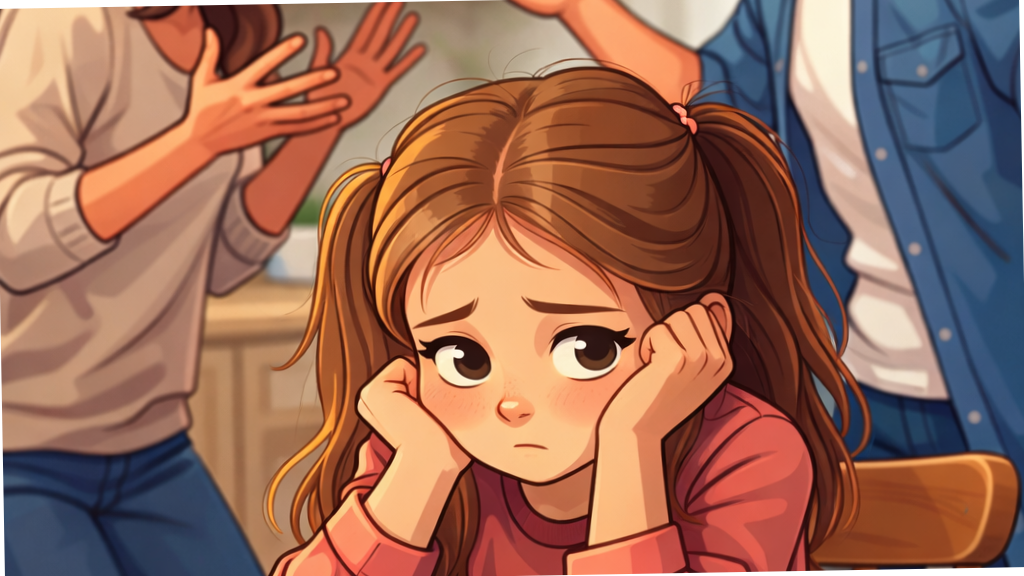
We often admire children who seem “too mature for their age.” They speak wisely, behave responsibly, and handle emotions better than expected. But what if that maturity isn’t a gift… What if it’s a response to stress?
The Silent Impact of Parental Conflict
A child’s emotional world is shaped at home. When parents are in constant conflict —arguments, tension, emotional distance—the child doesn’t just “observe” it.
They absorb it.
Over time, many children adapt in surprising ways. Instead of acting out, some become unusually calm, responsible, and emotionally aware. At first glance, this looks like resilience. But often, it’s something deeper.
Why Some Children Become “Too Mature”
Children in stressful homes often feel an unspoken responsibility:
“I need to keep the peace.”
“I shouldn’t add more problems.”
“I have to take care of others.”
This leads to a role reversal where the child starts behaving like the adult. Psychologists call this parentification—when a child takes on emotional or practical responsibilities beyond their age.
This kind of emotional burden can sometimes overlap with broader Neurological & Behavioural Disorders in children.
The Hyper-Aware Child
These children become extremely sensitive to emotions around them. They can:
Read moods instantly
Predict conflicts before they happen
Adjust their behavior to avoid tension
This constant alertness is called hypervigilance. It’s not just awareness—it’s survival.
In some children, this hyper-awareness may also appear alongside Behavioural & Feeding Problems, sleep changes, appetite changes, or emotional withdrawal.
What Gets Lost Along the Way
While these children appear strong, something important is often sacrificed:
Their need to be cared for
Their freedom to play and be carefree
Their ability to express vulnerability
In trying to stabilize their environment, they quietly suppress their own needs.
When emotional suppression starts showing through physical discomfort, repeated tiredness, headaches, or body symptoms, it may connect with Psychological-Psychosomatic Disorders.
The Hidden Cost of Early Maturity
As they grow older, these “mature” children may struggle with:
Anxiety or overthinking
Difficulty forming secure relationships
Feeling responsible for others’ emotions
Confusion about their own identity
Outwardly, they may still seem capable and composed. But internally, there’s often unresolved emotional strain.
For some children, early emotional pressure may also affect confidence, learning, social comfort, and overall Growth & Development Disorders.
Is It Really Maturity?
This is the key question. True maturity develops gradually, with support and safety. But when maturity appears too early, it may not be growth—it may be adaptation. A better term might be “functional maturity”— the ability to function well under pressure, even when emotional needs are unmet.
Parents looking at the wider child-health picture can also explore the full Pediatric Conditions section.
What Can Help?
For parents, caregivers, and clinicians, the goal isn’t to “reduce maturity”—but to restore balance.
That includes:
Creating a safe and stable emotional environment
Encouraging children to express feelings freely
Ensuring they are not burdened with adult responsibilities
Allowing them to simply be children
If parents need guidance for a child’s emotional, behavioural, or stress-related patterns, they can also consider an Online Consultation.
Final Thought
Not all strong children are okay. Not all mature children are thriving. Sometimes, what looks like strength is actually a quiet form of adaptation. And behind that calm, responsible child… there may be someone who had to grow up just a little too soon.