
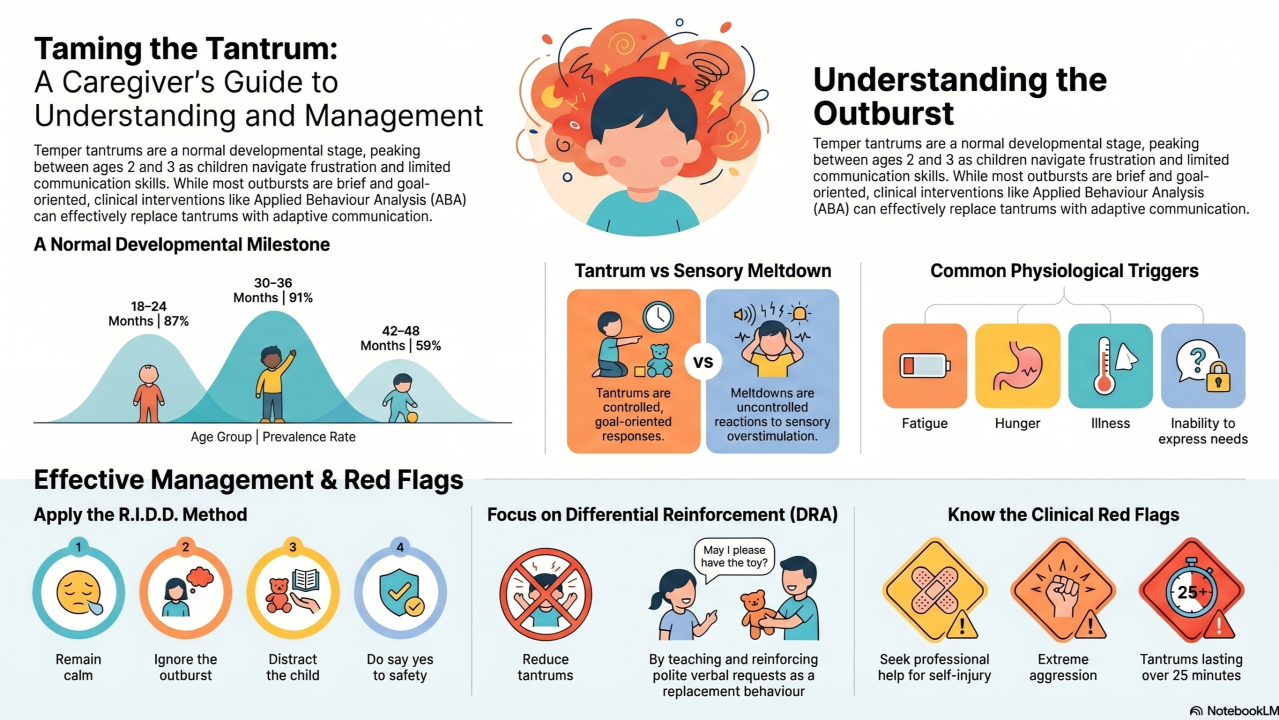
Temper tantrums aren’t “bad behavior” — they’re big emotions in a small body with no off-switch yet.
A child doesn’t throw a tantrum to manipulate; they do it because they can’t yet manage what they feel. Anger, frustration, hunger, tiredness — it all spills out at once.
In those moments, what they need isn’t control, but connection. Not punishment, but presence. Because every tantrum is actually a child saying, “I’m overwhelmed… help me handle this.”
When a child has a tantrum, their nervous system is working harder than their words. They may not know how to say, “I’m tired,” “I need help,” “This feels too much,” or “I don’t know what to do with this feeling.” So the emotion comes out through crying, shouting, falling on the floor, refusing to listen, or pushing everyone away. It can look dramatic from the outside, but inside, the child is often confused by their own intensity. Parents who notice frequent emotional outbursts along with sleep, feeding, or behaviour changes can also explore our page on Behavioural & Feeding Problems.
The adult’s calm becomes the child’s anchor. A soft voice, fewer words, a little space, and a steady presence can help more than long explanations in the middle of the storm. Once the child settles, that is when gentle teaching can happen: naming the feeling, talking about what happened, and showing them a better way to express it next time. If tantrums appear along with attention, learning, speech, or developmental concerns, parents may also find the Growth & Development Disorders and Neurological & Behavioural Disorders sections helpful.
Over time, children learn emotional regulation by borrowing it from the adults around them. Every calm response becomes a small lesson: big feelings are safe, they can pass, and love does not disappear when emotions get messy. For ongoing concerns, parents can review our broader Pediatric Conditions page or book a consultation to discuss their child’s pattern in detail.